

Executive Leadership
Beyond the Technology: What Defines an Effective Technology and Information Security Leader
September 3, 2026
Ask most people what a technology or security leader does, and they'll describe someone who keeps the bad guys out. That's part of it, but it isn't the job. The job is enabling the organization to pursue its objectives at a level of risk it can actually live with. The leaders who do this well combine technical credibility, commercial judgment, communication skill, and the ability to lead when nobody has complete information. None of that shows up on a certification.
Understand the business before prescribing technology
I've watched technology leaders walk into a room ready to talk about architecture before they understand how the business actually makes money. That's backwards. Before I'd trust anyone's technology or security recommendation, I want to know they understand how the organization creates value, serves its customers, and differentiates itself from competitors, not just its network diagram. Strategic priorities, critical operations, regulatory obligations, and risk tolerance all have to come first, because they're what technology and security investment should be measured against. If I can't trace a control back to a business outcome, I don't call it an investment. I call it overhead.
Stay technically credible without getting lost in the technical weeds
The best leaders I've worked with have enough technical depth to challenge an assumption, evaluate an architecture, and know when they're being sold something that won't hold up, but they don't try to be the most technical person in the room. Staying current on evolving threats and technologies matters, and so does trusting the specialists who actually implement the work. The skill that separates a leader from a senior technologist is translation: taking something technically complex and turning it into a clear choice, not a wall of jargon that makes an executive nod along without understanding what they just agreed to.
Cybersecurity is business risk, not a control gap
Executives don't think in vulnerabilities. What actually gets their attention is whether operations keep running, what it costs, what the legal exposure looks like, what it does to the organization's name, and who among their customers gets hurt. If a security conversation doesn't connect to one of those, it won't land, no matter how serious the underlying issue is. I frame these discussions around business services and critical assets, not control gaps in isolation, and I make sure the conversation covers likelihood, potential impact, the real options on the table, what risk remains after action, and the cost of doing something against the cost of doing nothing. That's a decision for the business to make, not the technical team, and it deserves to be framed that way from the start.
Be a business enabler, not the department that says no
A reflexive "no" is the easiest answer in security, and it's usually the wrong one. The leaders I respect find the secure, practical path to what the business is actually trying to do, and they get involved early, in transformation projects, product development, procurement, and partnership decisions, instead of showing up at the end to block what's already been decided. Protection, speed, usability, innovation, and cost all have to be balanced according to what the organization actually needs, not according to a security team's comfort level.
Communicate for the room you're in, not the one you left
The underlying risk assessment shouldn't change depending on who's in the room, but how you communicate it absolutely should. What a technical team needs to hear in a briefing and what a board needs to hear are rarely the same thing. Executives need concise, decision-ready information, not the operational detail that would be appropriate for the people actually doing the work. And the measures you report have to mean something: exposure, resilience, progress, business impact, not just a count of how many things the team did this quarter. Activity isn't the same as progress, and a board that's been shown activity metrics for years eventually stops paying attention to any of them.
Build influence before you need it
Cybersecurity fails as a function when it's treated as the sole responsibility of the security team. The leaders who actually move the needle build real relationships across technology, finance, legal, risk, operations, HR, and the business, before there's an incident forcing everyone into the same room for the first time. Part of that is candor: being honest about uncertainty, limitations, past incidents, and trade-offs, instead of projecting more confidence than the situation actually supports. Trust built during a calm period is what gets you cooperation during a bad one.
Resilience matters more than perfect controls
No control stack prevents every failure, and planning as if it will is a mistake I still see leaders make. The organizations that recover well assumed, going in, that something would eventually go wrong, and invested accordingly in preparation, detection, response, recovery, and the discipline to actually learn from what happened. That means exercising crisis plans with executives and business teams, not just the security function, so decision rights and roles are understood before an incident forces everyone to figure them out in real time.
Lead people as deliberately as you lead technology
Technology decisions get a lot of attention. People decisions get less than they deserve. Strong teams need more than technical skill, they need business judgment, risk thinking, and the ability to communicate, and building that mix deliberately matters as much as any architecture decision. The culture question matters just as much: whether people feel safe raising a concern early, and whether a mistake becomes something the team learns from or something people learn to hide. And no leader should build a program so dependent on themselves, or on one or two key people, that losing them puts the whole thing at risk.
AI is both the opportunity and the risk
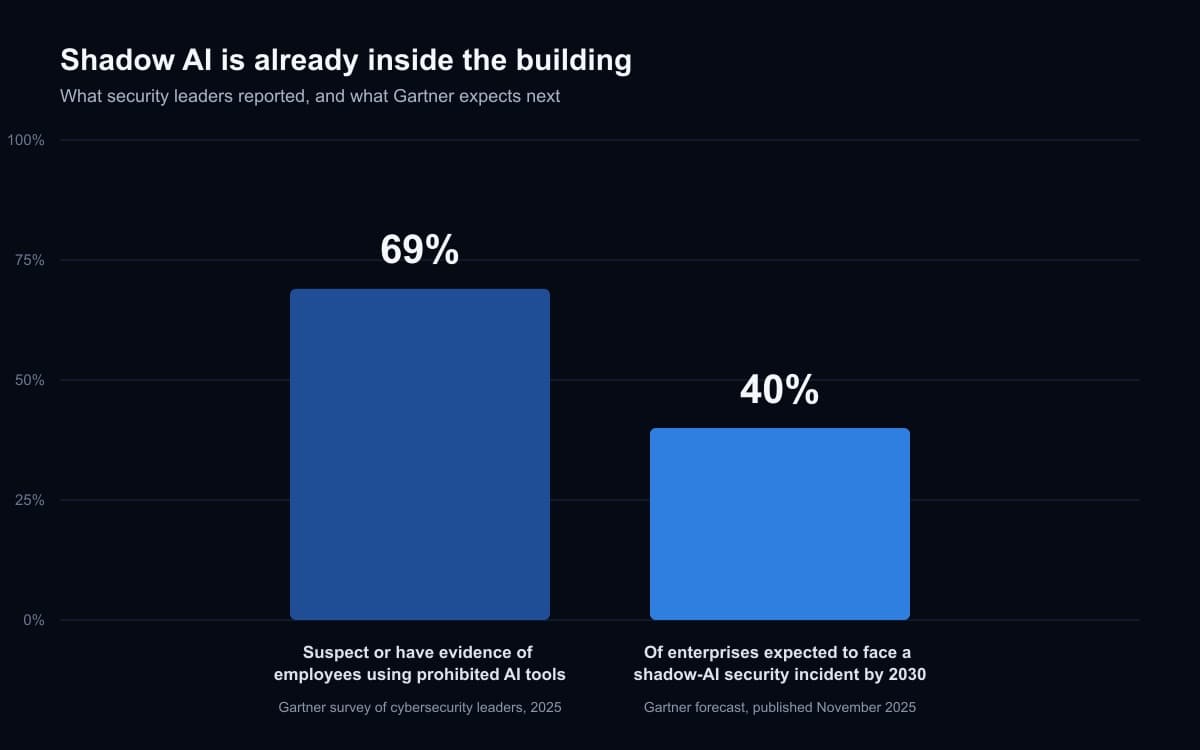
AI is a strategic capability for the business and a new category of risk at the same time, and treating it as only one or the other is a mistake I'd flag immediately. The real list of concerns is longer than most governance conversations acknowledge: sensitive data leaking into a model, outputs that are confidently wrong, shadow AI nobody approved, models that can be manipulated, dependency on third parties, intellectual property exposure, and AI-enabled attacks aimed back at the organization. Proportionate governance has to cover approved use cases, how data is handled, where human oversight sits, testing, monitoring, accountability, and incident response, and it has to avoid becoming the innovation bottleneck that pushes people toward using AI without telling anyone. Give teams a controlled environment to experiment in, and use AI inside technology and security operations where it genuinely improves speed or insight, while keeping human judgment attached to anything consequential.
Stay adaptable as the risk itself keeps changing
The specific threats change constantly. What should hold steady are the principles and decision frameworks flexible enough to accommodate technology that doesn't exist yet. That means continuously reassessing assumptions, emerging risks, dependencies, and whether controls that worked two years ago still work now. The most capable leaders I know are comfortable saying what they don't know yet, and they can describe how the organization is going to learn it. That kind of intellectual humility is a strength in this work, not a weakness.
Strip all of this down and the defining capability of a modern technology and security leader is translation: strategy into technology priorities, business exposure into cyber risk, technical complexity into executive decisions, and something as new as AI into a responsible opportunity instead of an unmanaged one. Success was never supposed to be measured by how many controls got deployed. The real measure is simpler: can the organization keep innovating, keep operating, and recover with confidence when something goes wrong. That's the job. Everything else is just how you get there.